
Showing posts with label Research. Show all posts
Showing posts with label Research. Show all posts
Monday, 30 March 2015

Tuesday, 24 February 2015
Wednesday, 21 January 2015
Modern Thriller Openings
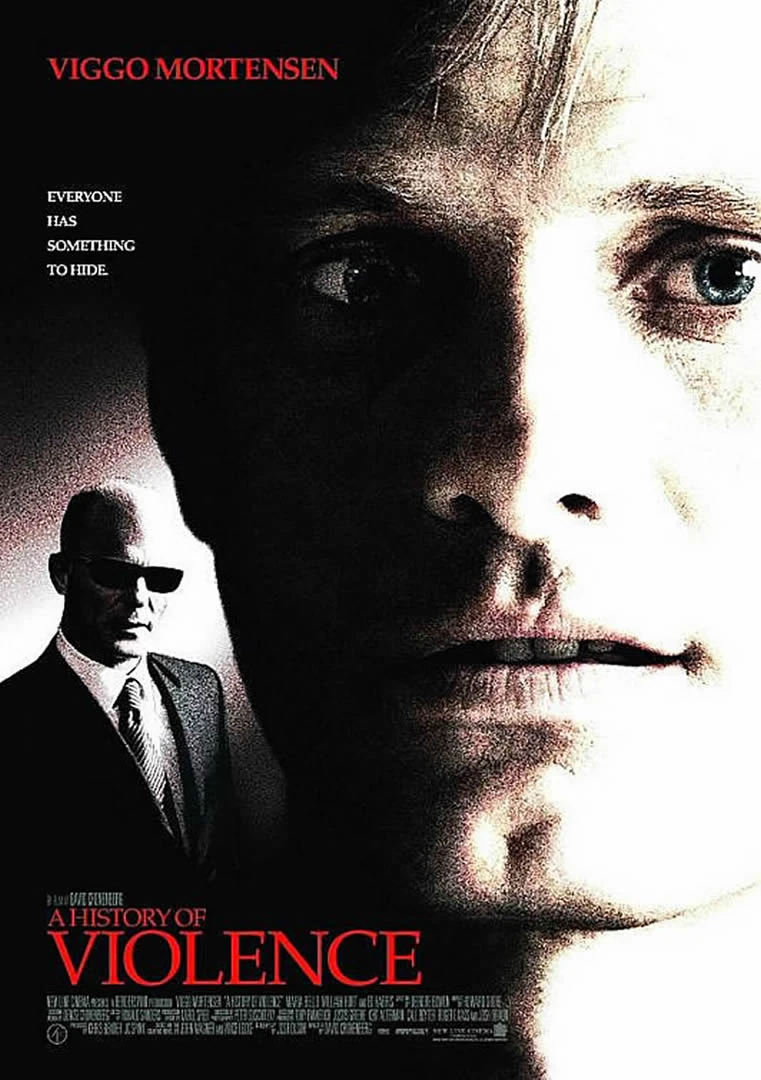
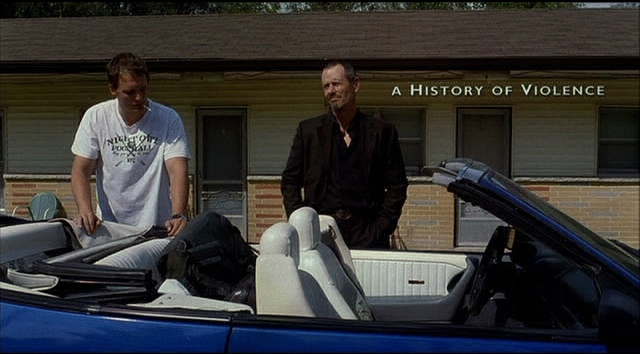
A History of Violence
The opening of this thriller starts tranquil and quiet. The pacing is very slow and creates a tedious effect, leaving the audience wondering what's going to happen. The scene is set in a small motel;the mis-en-scene of this opening makes the film seem desolate and deserted. The camera work is still and slow using a tracking shot to follow the characters. This opening fits in with the typical conventions of a thriller because it adds suspense because of how slow the pace is. Action then picks up when the opening comes to an ending. This leaves a short cliffhanger for the audience, questioning why the man killed all of those people in the hotel and why the man shot the child. Following the convention of tension, there is a part in the scene where we are left with one guy sitting in a car while the other goes into the reception. This leaves us clueless and left in the dark about what is happening. The sound of crickets is played continuously then transitions into loud dramatic music, this suggests an oncoming action sequence.


No Country for Old Men
The mis-en-scene is shown to be in a desert. The fact that it is set in the desert contributes the stranded feel the opening has, barely anyone is around creating an eerie atmosphere. The pace picks up with quick editing of an action sequence. Moreover, there's a gradual build up of sinister music being played in the background. Suggesting suspense is increasing and the main character becomes more and more ominous to the audience. During this scene there's various camera shots, to give the viewer an idea of the setting. Additionally, the use of camera shots is used to the advantage of the killing scene as it makes the scene more fast paced, increasing the adrenaline of the audience.


Zodiac
The opening of this film fits into the criteria of a thriller because it starts off normally, where the characters don't seem to be in any danger. The music is lighthearted and does not signify a crisis, which leaves the audience wondering what could go wrong - this can also gain suspense. The pace is prolonged as we are waiting for something bad to happen. As the killer shows up the editing pace slows down as there are quick shots from one person getting shot to the next. The music in the background progressively increasing and becomes louder, as the killer shots the young people. heightening the pace.


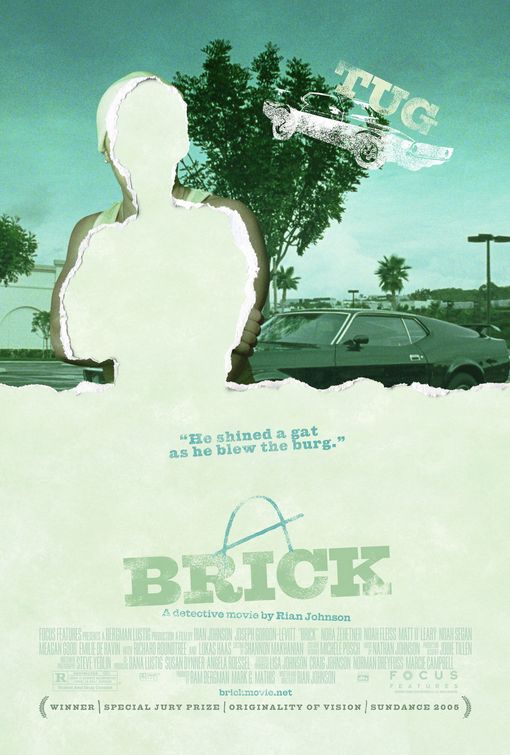
Brick
Brick starts in a culvert with a close up of a girl's arm lying presumably dead, with a teenage boy hovering around her. The atmosphere created makes the audience unclear of what is going on - generating suspense, this is shown in the beginning. When showing a series of close ups we are uncertain about what is taking place. Furthermore, the music of this opening is creepy and unsettling for viewers suggesting that the movie will create this tone throughout, or often. The blue tint of the scene shows a melancholy environment and a cold one too.


The opening of this thriller starts tranquil and quiet. The pacing is very slow and creates a tedious effect, leaving the audience wondering what's going to happen. The scene is set in a small motel;the mis-en-scene of this opening makes the film seem desolate and deserted. The camera work is still and slow using a tracking shot to follow the characters. This opening fits in with the typical conventions of a thriller because it adds suspense because of how slow the pace is. Action then picks up when the opening comes to an ending. This leaves a short cliffhanger for the audience, questioning why the man killed all of those people in the hotel and why the man shot the child. Following the convention of tension, there is a part in the scene where we are left with one guy sitting in a car while the other goes into the reception. This leaves us clueless and left in the dark about what is happening. The sound of crickets is played continuously then transitions into loud dramatic music, this suggests an oncoming action sequence.
No Country for Old Men
The mis-en-scene is shown to be in a desert. The fact that it is set in the desert contributes the stranded feel the opening has, barely anyone is around creating an eerie atmosphere. The pace picks up with quick editing of an action sequence. Moreover, there's a gradual build up of sinister music being played in the background. Suggesting suspense is increasing and the main character becomes more and more ominous to the audience. During this scene there's various camera shots, to give the viewer an idea of the setting. Additionally, the use of camera shots is used to the advantage of the killing scene as it makes the scene more fast paced, increasing the adrenaline of the audience.


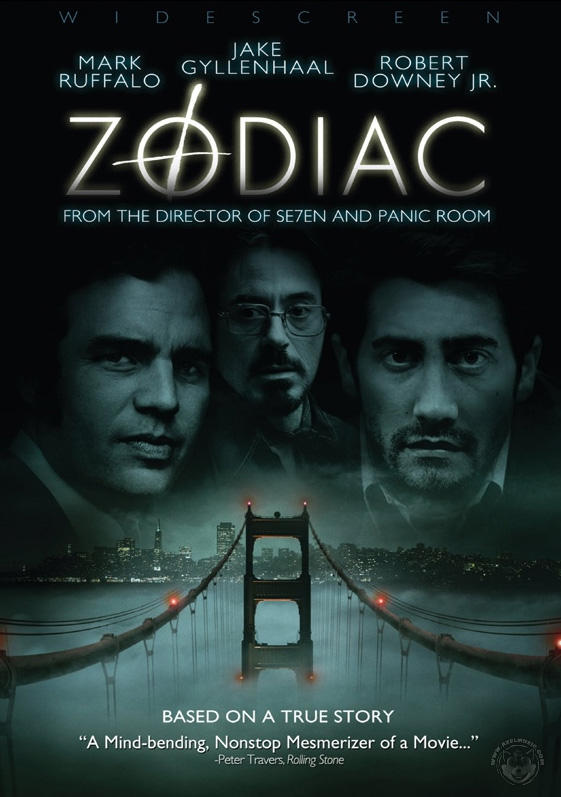
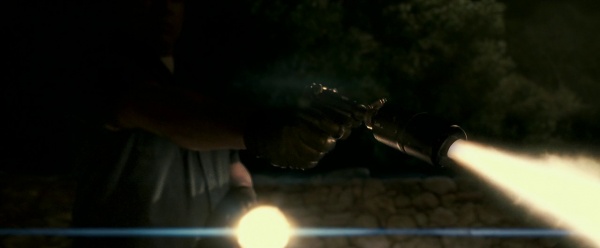
Zodiac
The opening of this film fits into the criteria of a thriller because it starts off normally, where the characters don't seem to be in any danger. The music is lighthearted and does not signify a crisis, which leaves the audience wondering what could go wrong - this can also gain suspense. The pace is prolonged as we are waiting for something bad to happen. As the killer shows up the editing pace slows down as there are quick shots from one person getting shot to the next. The music in the background progressively increasing and becomes louder, as the killer shots the young people. heightening the pace.
Brick
Brick starts in a culvert with a close up of a girl's arm lying presumably dead, with a teenage boy hovering around her. The atmosphere created makes the audience unclear of what is going on - generating suspense, this is shown in the beginning. When showing a series of close ups we are uncertain about what is taking place. Furthermore, the music of this opening is creepy and unsettling for viewers suggesting that the movie will create this tone throughout, or often. The blue tint of the scene shows a melancholy environment and a cold one too.

Friday, 9 January 2015
Studio Idents
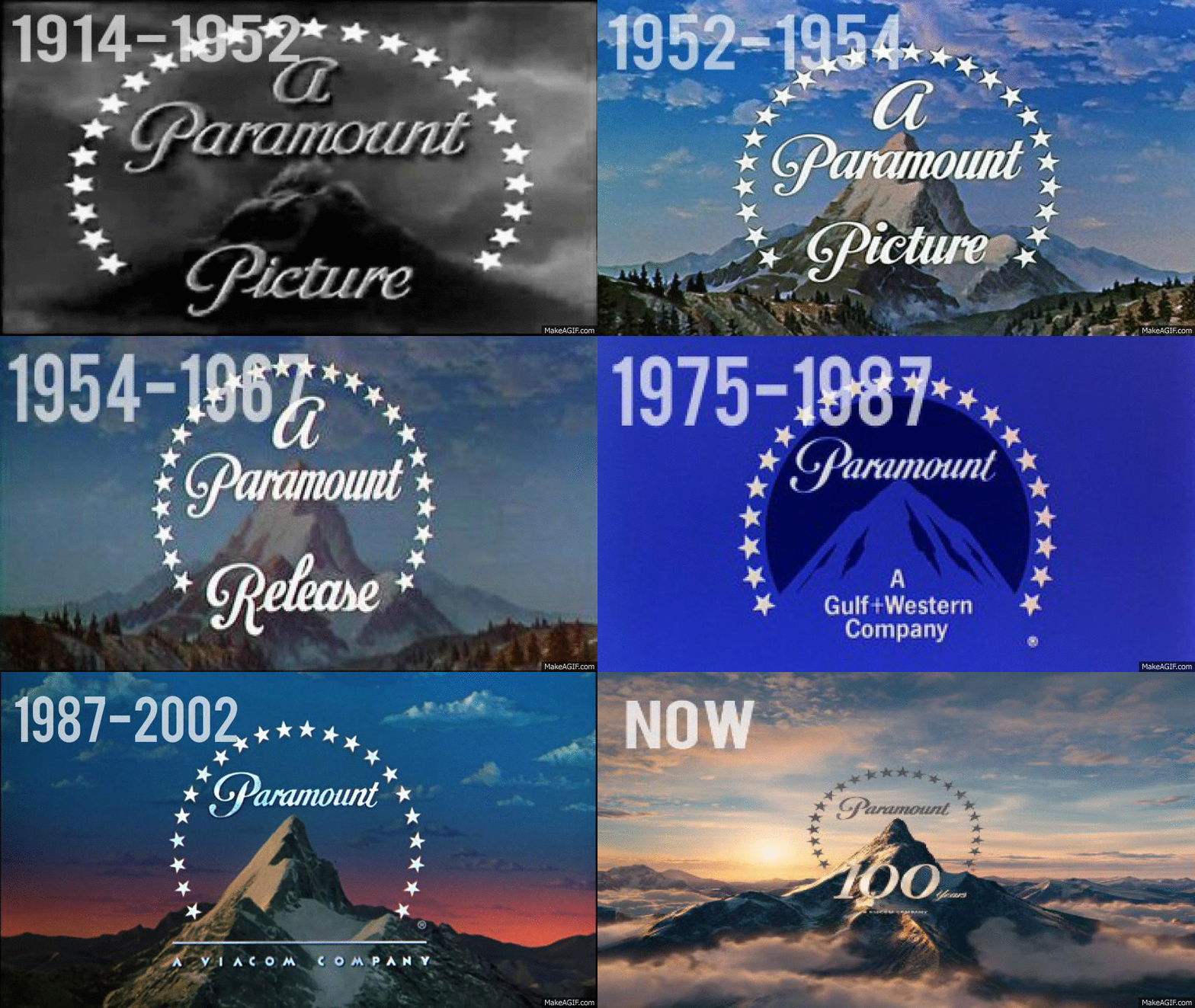
This company have evolved over the years as their logo possesses great change. As technologically had progressed so has the graphic elements in their logo. It has become more appealing to the present day audience. In 1914 the logo was in black and white also representing how the movies were filmed in that time. Staring with the 1952 logo, colour has been introduced. The studio logo now looks more modern and graphically more advanced. This logo shows how significant the studio is. The fact that there is a mountain illustrates the grandness and prestigious the production us.
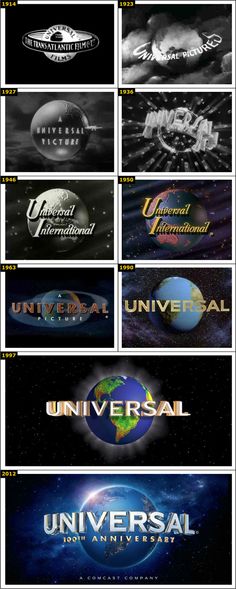
The universal logo has changed drastically from 1914 to 2012. Firstly, it introduced colour in 1930 like Paramount. This made he logo more appealing and pleasant to the eye. Also, originally the logo did not have the appearance of the earth and by 1923 it looked more like a globe. This represents their brand as it shows how they relate to people all around the world and are universal, hence the name. The logo shows a significance of the production company as it portrays the whole world suggestion that they have a great status and can be recognised around the world. The graphical element of the logo has also enhanced by 2012, including lots of detail and realism.
Independant film productions are more recent than the more major film productions. As they have been founded in more of the recent years from the late 90's to the 2000's. Therefore, there has not been much development in their studio ident. An example of an "indie" studio is Roadside Attractions, they begun in 2003. This logo has evolved in a way that is more appealing to the eye. The colour looks more professional and there is far more detail. The ident presents the studio as being a great studio because of how it is an eye-catching sign amongst the city skyline at the back, drawing the attention.

This is another indie film production, it is based in England. The 2D logo is very simple with a bold black logo. The lightening bolt going across the globe suggests even though they are a small company they have ambitions of making films all over the world. The logo does not show much use of CGI or colour, which shows how they are a low budget film company.

Monday, 5 January 2015
Monday, 15 December 2014
Unknown

Using a series of thriller devices such as the sound track, close ups and fast editing. This thriller contains a lot of suspenseful scenes. For example the car chase scene
( Car Chase Scene - Unknown ) During this scene the following takes place:


( Car Chase Scene - Unknown ) During this scene the following takes place:
- Fast pace action - this gives the audience anxiety on whether or not they will overcome this problematic state.
- Life threatening danger creates tension on if they are going to get killed by the train at the end or caught up by the enemy.
- Dramatic soundtrack - makes more suspense as it heightens the mood, by causing the audience to think something bad is about to happen.
- Quick editing - there is approximately 90-100 cuts within this one minute and sixteen second clip, this shows how it goes in an extremely rapid pace; therefore capturing the audiences attention throughout.
- Editing cuts - the editing is also cut as if we feel more apart of the film. For instance when a shot is cut to someone looking through the window or changing gears. This makes the scene feel more relatable, in a situation that is very unlikely to occur in someone's everyday life.
This film can also fit into Todorov's Narrative Theory:
- Firstly, the state of equilibrium - this is when Dr, Martin Harris and his wife Elizabeth Harris are together on the plane and at the airport.
- A disruption takes place - when Martin Harris goes into a coma
- Recognition the disruption has occurred - he realizes he has been away from his wife for a number of days without knowing where he is. He realizes that another man has taken his identity.
- An attempt to repair the damage - He then goes to seek proof that he is in fact Martin Harris
- A new equilibrium - he finds out the truth about himself and sets out for a new life with Gina
Furthermore, Vladimir's Propp character types.
- The Hero in this case Dr. Martin Harris because we are on his side throughout the movie
- The Villain(s) is the people who are trying to kill Dr. Matin Harris and his wife
- The Helper is Gina and for a while, the spy (Ernst Jurgen)
- The Donor is also the spy as he gives Martin Harris information that will help towards his quest
- The Dispatcher is the main character himself as he identifies the crisis and goes to fix it
- The Princess is ambiguous, however it could be Gina
Friday, 12 December 2014
Mise-en-scene
The meaning of Mise-en-scene is "in the scene or frame" in french. The main factors of mise-en-scene are the following:

- settings and props
- costume, hair and make-up
- facial expressions and body language
- lighting and colour
- positing of characters and objects in the frame
Colour: Denotation and Connotation
Colours can be interoperated in many different ways, especially in film. It can reflect different moods and feelings within the scene. When it comes to the literal description of a idea, concept or object this is the denotation. The opposite is the connotation, which we can associate with a particular idea, concept or object.
An example of an effect use of colour in the film We Need to Talk About Kevin. The uses of the colour red can indicate a vicious murder or danger.
Facial Expression and Body Language
We communicate through facial expressions and body language. Which is important particularly in media because it can display a lot about a character and what they are feeling. To show the characters facial expressions, the shots would often be close ups and extreme close ups.
Positioning of Characters and Objects Within a Frame
Objects and characters can be in the foreground, middle-ground or background. This can emphasise the relative importance of the object or character. When a shot is in deep focus both the foreground and background are in focus. This enables the audience to choose where they are going to look. In the film The Best Years of Our Lives it shows a good example of a scene that is in deep focus. Here you can see what all of the characters are doing within the scene, so the audience can look at every individual.

Monday, 8 December 2014
Title Sequences
Title sequences can effect the mood of a film. It anticipates us for the film as it sets the mood for what the audience is to expect. The opening title sequence for most films is to proceed the steps as follows:
- The production company Ident - All films have a production company, this is where the name of the company is displayed. Iconic logos such as MGM, Paramount, Universal, Walt Disney or Warner Brothers can be recognised throughout the world.
- Then comes "The production company presents"
- Next, "A film by... (Directors name)"
- Afterwards it features the main stars of the films names
- Then the movie title
- Other major cast members are after
- Next comes the film crew members that helped out in the movie the most
- Producer
- Finally, the director again
On the website The Art of the Title it contains several title sequences from various movies and television shows - new and old. An example of a title sequence is from a film called Scott Pilgrim vs. The World:
Scott Pilgrim vs the World (2010) — Art of the Title
This movie is made from the production company Universal. While the Universal ident in pixels is being displayed an 8 bit tune plays in the background which resembles a video game, implying a reference to video games will be shown throughout. Firstly, the beginning title of the film is presented, overlaying the opening scene; then it goes onto a black background where the rest of the title follows up. The title sequence gives us a clue of a very vibrant and graphic film because of the use of colours and patterns which are used to present the main stars of the film.

The Girl with the Dragon Tattoo
Moreover, the film The Girl With The Dragon Tattoo has an eerie and sinister feel to it. The production company is Columbia and MGM. The opening starts with flashes of matte black images. Next is "a film by David Fincher and the actors names are shown in a menacing form amongst the slow moving black liquid. Thirdly, the title of the movie is shown in metal writing, giving a bold statement of what is to come. It implies a very dark and disturbing thriller, which can be shown through the effects and the music played in the background. Next, the rest of the main stars are shown during more portrayals of figures and object covered in black. Then, the rest of the production team is shown like producers, production designers and director of photography. The sequence concludes drastically with a fast pace and intense person coming towards the screen, before the directors name is shown again.


This movie is made from the production company Universal. While the Universal ident in pixels is being displayed an 8 bit tune plays in the background which resembles a video game, implying a reference to video games will be shown throughout. Firstly, the beginning title of the film is presented, overlaying the opening scene; then it goes onto a black background where the rest of the title follows up. The title sequence gives us a clue of a very vibrant and graphic film because of the use of colours and patterns which are used to present the main stars of the film.

The Girl with the Dragon Tattoo
Moreover, the film The Girl With The Dragon Tattoo has an eerie and sinister feel to it. The production company is Columbia and MGM. The opening starts with flashes of matte black images. Next is "a film by David Fincher and the actors names are shown in a menacing form amongst the slow moving black liquid. Thirdly, the title of the movie is shown in metal writing, giving a bold statement of what is to come. It implies a very dark and disturbing thriller, which can be shown through the effects and the music played in the background. Next, the rest of the main stars are shown during more portrayals of figures and object covered in black. Then, the rest of the production team is shown like producers, production designers and director of photography. The sequence concludes drastically with a fast pace and intense person coming towards the screen, before the directors name is shown again.
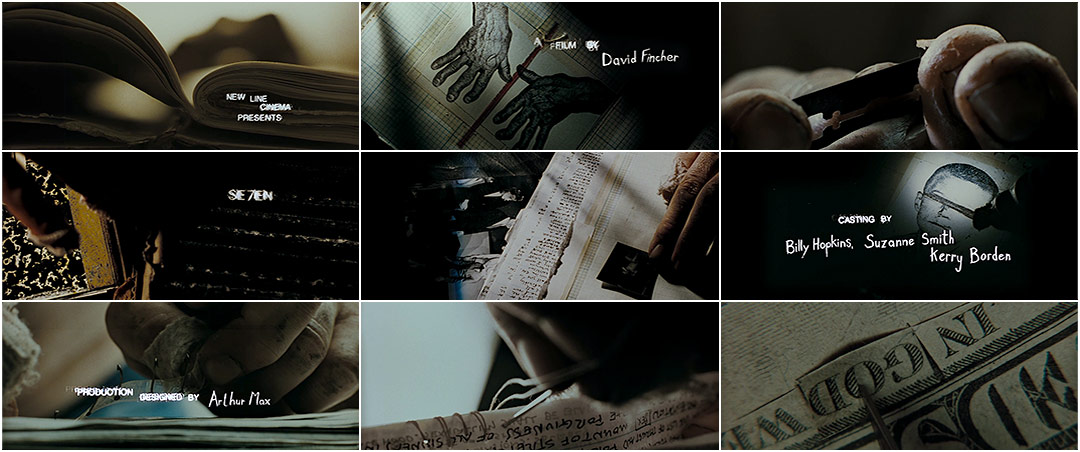
Se7en (1995) — Art of the Title
These opening credits creates an eerie atmosphere from the start, because of the font of the writing and the ominous music. The title sequence starts with the production company name which is New Line Cinema and the "a film by David Fincher". Throughout, it shows a series of creepy imagery of sharp objects against skin; and out of the ordinary on goings. Then proceeds the main title of the film, shuddering on the screen. Next, the main stars of the film is displayed, flashing upon the screen as shaking. The casting director and music and costume designers etc are showcased, again in the same format. Then finally, the director is shown once again. From the title sequence I can tell that this will show some aspects of horror and mystery. The display of anonymous people could show some sort of murder case, which will be dark and obscure.
Friday, 5 December 2014
How to Film a Thriller
The techniques used in this short film are based on thriller conventions. It showcases a variety of camera angles and sound techniques. A long shot is used to capture the setting that is present, then a point of view shot is shown.


A birdseye view is shot above the main actor making him seem vulnerable and isolated. Furthermore,
sinister music build up to create suspense and a sign that danger is among him.
Afterwards, there is a small frame of the man in the shot surrounded by a crack in the wall. This can imply how someone is watching him secretly, which creates a suspenseful atmosphere.

A point of view shot is shown at a low angle in a fast pace. This indicates the audience how something is heading to get the man.

Next, the wormseye view is there illustrating how the man is extremely big and tall. During this scene fast pace editing occurs, suggesting danger is ahead an tilted shots of the setting.


Wednesday, 26 November 2014
North By Northwest Review
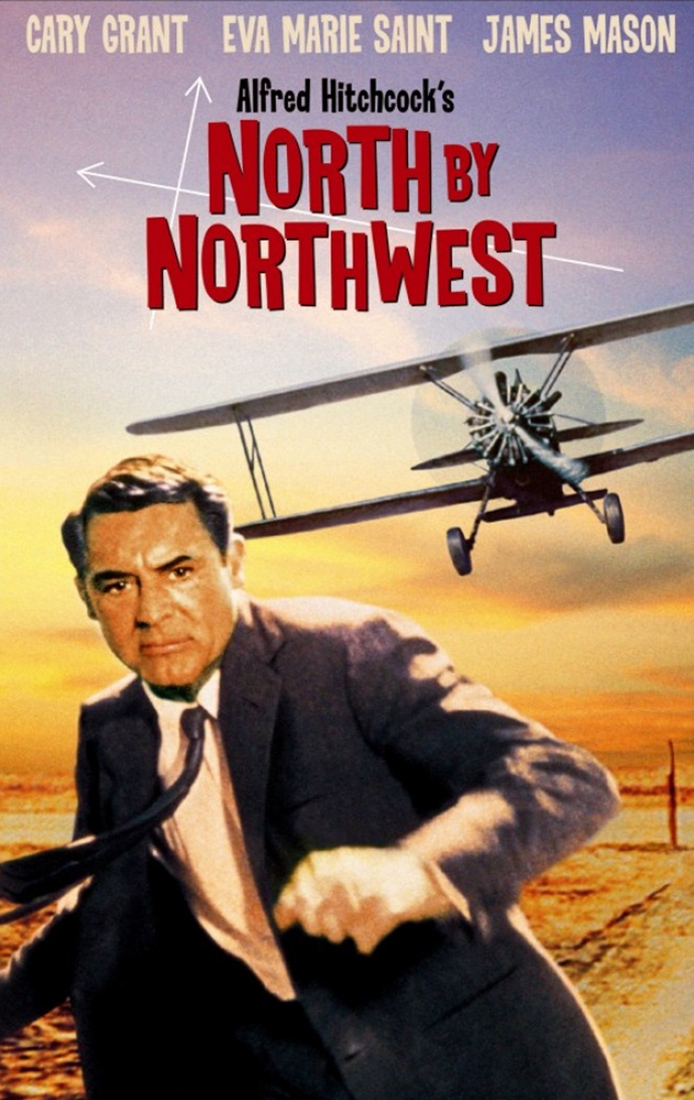
North By Northwest (1959) is an acclaimed thriller from director Alfred Hitchcock written by Ernest Lehman. The film shows the hectic life of Roger Thornhill (Cary Grant) when his identity gets mistaken for a stranger. Thus begins the wild cat and mouse chase between Thornhill and his new found nemesis' Philip Vandamm played by James Mason; . He then bumps into a mysterious women by the name of Eve Kendall (Eva Marie Saint) who assists him on his quest to find the man whom he is mistaken for.
North By Northwest is an example of the portrayal of a thriller. As said by Hitchcock " A thriller is a villain driven plot, whereby he presents obstacles the hero must overcome." It's fast pace with frequent action and includes many cliffhangers. Every scene Hitchcok filmed was heavily planned visually in advance. He even learned the script to his film. This movie fits into many of the thriller sub genres. like mystery, drama and action. The combination of romance, violence and a constant speculation on who this mysterious George Kaplan is, who Roger Thornhill is mistaken for. This create a thrill ride for the audience, because all aspects are fused into one film. It also includes frequent thriller devices such as:

Red Herring - In this scene the audience is lead to believe that Eve Kendall had shot Roger Thornhill. However, the whole dramatic act was fake. As Eve pretends to fire a shot at Roger, and he falls down; which misleads the audience causing confusion.

Cliffhanger - At the end of the movie, the suspenseful chase between the heroes and the villain concludes as Eve is hanging off Mount Rushmore. The audience is tense as they do not know whether she will fall or not or if Roger will will reach his hand far enough to save her.
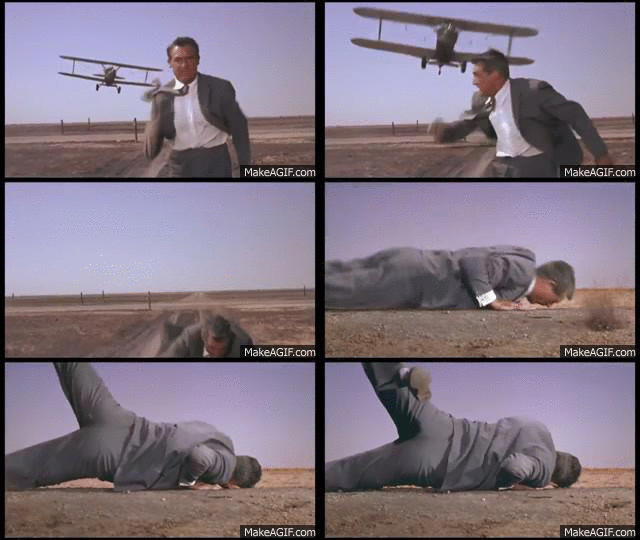
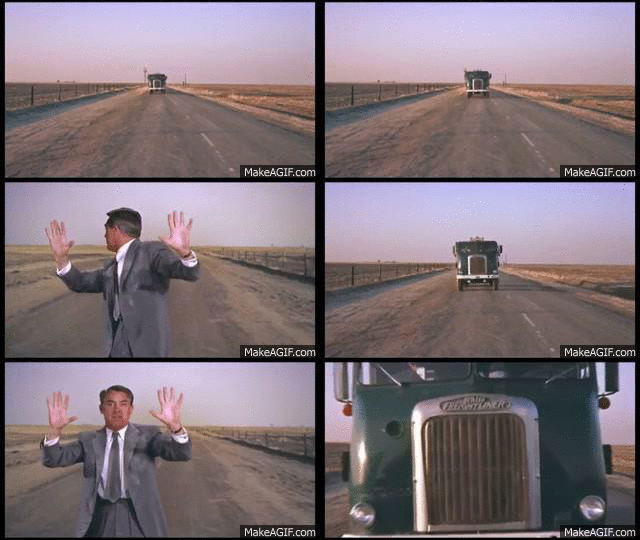 Suspense - The crop scene contains the most tension and action. Roger is chased down by a malicious crop duster trying to kill him. He then seeks help from an incoming lorry which looks like is going to run him over. This heightens the viewers anxiety, because of the unknown conclusion.
 1). Equilibrium
Moreover, as other movies this fits into Todorov's Narrative Theory also, as following:
The state of equilibrium being Roger carrying out his daily errands his assistant.

2). Disruption
Then the disruption occurs when Roger Thornhill's schedule doesn't occur as expected. When two men stop him while one of them one s a gun to his chest threatening to kill him unless Roger follows them.
Then the disruption occurs when Roger Thornhill's schedule doesn't occur as expected. When two men stop him while one of them one s a gun to his chest threatening to kill him unless Roger follows them.

3). Recognition
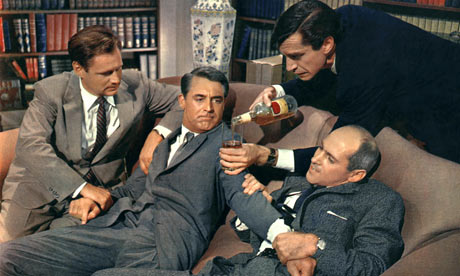
Roger recognizes that the disruption has occurred, once he realizes that they think he is George Kaplan and Roger knows this is a mistake. He is taken to a mysterious house where the villains force him to get drunk.
4). Reparation
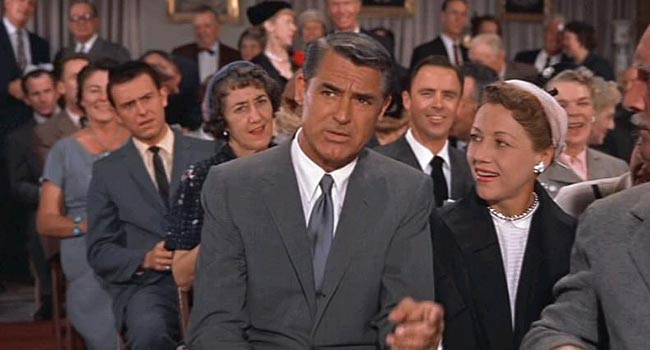
Afterwards, Roger goes on a quest to find George Kaplan. He tries to get the villainous Vandamm captured and arrested by the police.
5). Return to Equilibrium
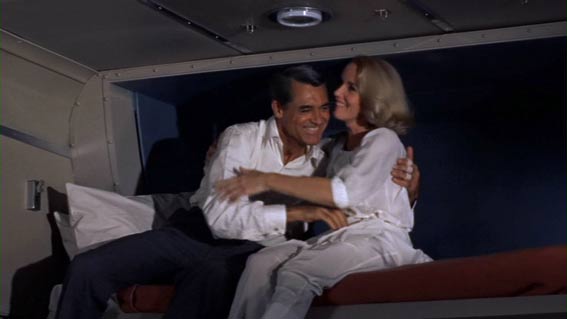
Roger starts a new life with Eve after he beats Vandamm.


Tuesday, 18 November 2014
Past Student Thrillers
The following are my reviews and interpretation of the past student thrillers.
4 - Excellent
3 - Good
2 - Basic
1 - Poor
Power Cut
This short thriller is very poorly and clumsily made, from the setting to the plot. The use of the setting was extremely basic and unsuccessful, when it comes to giving it a feel of a working office it was entirely unbelievable. The unnecessary use of black and white gave no substance to the story, there was no reason for it. However, they had good use of camera work at the start of the film with the panning and transitions. So overall, I would give this a score of 2.
Hunter
The short film 'Hunter' shows a good representation of a well constructed thriller. The costumes are well compelled, as they portray the characters perfectly. The casting has been picked appropriately and the setting fits the story. They impressively used the bat successfully by showing it from the front making it more believable. The only issue with this is that the conversation between the detective and the PE teacher went on until it became tedious. I rated this a 3.
The Routine
The Routine has a wide range of camera techniques, and they are all done triumphantly. Including a rolling shot and also a point of view shot at the end used to create suspense and an original take on what would of being an ordinary shot of someone walking. The shots taking with a mirror is hard to achieve without showing the camera in it to. Especially the shot with the villain in the mirror gave an element of surprise and shock to the audience. The editing was competent; even though the editing was simple it made an impact. The concept of the film and plot was adequately done to the point where it became a psychological thriller, adding great substance and story. I gave this a 4 because of the great effort put in.
4 - Excellent
3 - Good
2 - Basic
1 - Poor
Power Cut
This short thriller is very poorly and clumsily made, from the setting to the plot. The use of the setting was extremely basic and unsuccessful, when it comes to giving it a feel of a working office it was entirely unbelievable. The unnecessary use of black and white gave no substance to the story, there was no reason for it. However, they had good use of camera work at the start of the film with the panning and transitions. So overall, I would give this a score of 2.
Hunter
The short film 'Hunter' shows a good representation of a well constructed thriller. The costumes are well compelled, as they portray the characters perfectly. The casting has been picked appropriately and the setting fits the story. They impressively used the bat successfully by showing it from the front making it more believable. The only issue with this is that the conversation between the detective and the PE teacher went on until it became tedious. I rated this a 3.
The Routine
The Routine has a wide range of camera techniques, and they are all done triumphantly. Including a rolling shot and also a point of view shot at the end used to create suspense and an original take on what would of being an ordinary shot of someone walking. The shots taking with a mirror is hard to achieve without showing the camera in it to. Especially the shot with the villain in the mirror gave an element of surprise and shock to the audience. The editing was competent; even though the editing was simple it made an impact. The concept of the film and plot was adequately done to the point where it became a psychological thriller, adding great substance and story. I gave this a 4 because of the great effort put in.
Thursday, 6 November 2014
Editing
Editing is the process of going through all of the footage that has been made and placing it in the order desired, joining it all together. There are two areas that are the main focuses: speed and style.
Speed
 In a film each scene could last for a few seconds or minutes. The time of the shot may vary according to what the mood of the film is making. If the pace of the film is heightened with quick editing this illustrates suspense and frequent action taking place. The scene shots will change frequently also, this speed of editing occurs mostly with thrillers and action films, for example The Avengers Assemble and The Bourne Ultimatum.
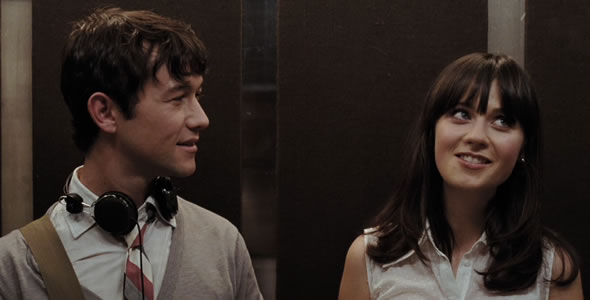
 If a more chilled mood is wanted, the scene will be considerably longer with less cuts and not so frequent scene changes. This speed of editing occurs widely with romantic comedies, for example (500) Days of Summer and Crazy, Stupid Love.
Style
Straight Cut
 Dissolve
This is when one shot fades out while the other shot gradually fades in. The audience is able to see both shots in one frame at the mid point of the dissolve. The dissolve effect is used to show how a period of time has passed between these two scene.
Fade
 When a shot is fading it progressively lightens or darkens the image until it become completely black or white, This can signify someone passing out, dying etc. Fade ins occur during the start of the film and fades out are the opposite.
Wipes
 One image is replaced by another in the frame
with a vertical/horizontal line or any other shape. The most famous use of this transition was George Lucas' Star Wars franchise.

Jump Cut
This style of editing breaks the continuity method. Jump cuts are not favored by directors this is because of the continuity error it comes across. When a jump cut is used it can be seen profoundly as it looks like a large section of the movie has been removed.
Graphic Match
 This technique is used to transition one scene to the next fluently, using two shapes or objects that look similar to each other. It's designed to be subtle, so the audience can't see the change of scene.


Shot/Reverse Shot
This editing skill is often used to portray conversations or arguments happening between characters. One character is shown looking at another character, then in the next shot the character is looking at the initial character.
Match-on-action
 This is when the editor takes two separate shots of an action, that starts in one scene and finishes in the next, and places them together seamlessly.

Eye-line Match
When we see a character looking at something that is off screen. The camera then follows the characters gaze at the thing they are looking at.
Continuity
 The initial establishment of this style of editing is to create a realistic coherency. That gives a logical sense of time moving forward, this is achieved with smooth cuts between shots.

The 180 Degree Rule
A guideline that illustrates how a scene should be taken when two characters are in the same scene. It states how the characters should always stay at the same position as they were from shot to shot, whether that be left or right from each other. If the camera should pass over the dotted line shown in the diagram this is called crossing the line.
Speed
 In a film each scene could last for a few seconds or minutes. The time of the shot may vary according to what the mood of the film is making. If the pace of the film is heightened with quick editing this illustrates suspense and frequent action taking place. The scene shots will change frequently also, this speed of editing occurs mostly with thrillers and action films, for example The Avengers Assemble and The Bourne Ultimatum.
  If a more chilled mood is wanted, the scene will be considerably longer with less cuts and not so frequent scene changes. This speed of editing occurs widely with romantic comedies, for example (500) Days of Summer and Crazy, Stupid Love.
 Style
The transition from one scene to the next can be conducted in different ways.
Straight Cut
Most common when trying to subtly change from one shot to the next. Straight cuts are not acknowledged by the audience, which helps maintain a sense of reality.
DissolveThis is when one shot fades out while the other shot gradually fades in. The audience is able to see both shots in one frame at the mid point of the dissolve. The dissolve effect is used to show how a period of time has passed between these two scene.
Fade
When a shot is fading it progressively lightens or darkens the image until it become completely black or white, This can signify someone passing out, dying etc. Fade ins occur during the start of the film and fades out are the opposite.Wipes
 One image is replaced by another in the frame
with a vertical/horizontal line or any other shape. The most famous use of this transition was George Lucas' Star Wars franchise.

Jump Cut
This style of editing breaks the continuity method. Jump cuts are not favored by directors this is because of the continuity error it comes across. When a jump cut is used it can be seen profoundly as it looks like a large section of the movie has been removed.
Graphic Match
 This technique is used to transition one scene to the next fluently, using two shapes or objects that look similar to each other. It's designed to be subtle, so the audience can't see the change of scene.
Shot/Reverse Shot
This editing skill is often used to portray conversations or arguments happening between characters. One character is shown looking at another character, then in the next shot the character is looking at the initial character.
Match-on-action
 This is when the editor takes two separate shots of an action, that starts in one scene and finishes in the next, and places them together seamlessly.
Eye-line Match
When we see a character looking at something that is off screen. The camera then follows the characters gaze at the thing they are looking at.
Continuity
The initial establishment of this style of editing is to create a realistic coherency. That gives a logical sense of time moving forward, this is achieved with smooth cuts between shots.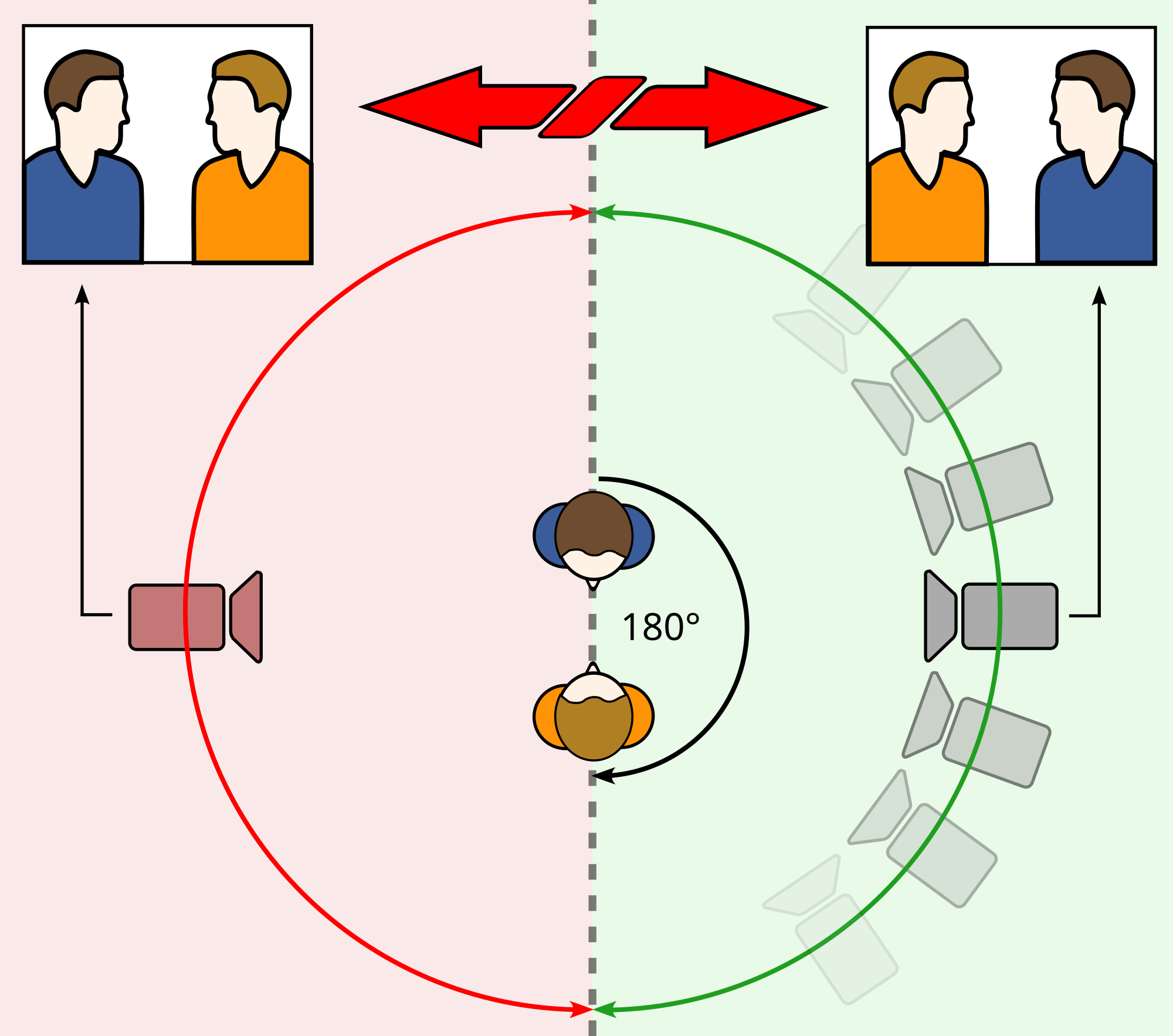
The 180 Degree Rule
A guideline that illustrates how a scene should be taken when two characters are in the same scene. It states how the characters should always stay at the same position as they were from shot to shot, whether that be left or right from each other. If the camera should pass over the dotted line shown in the diagram this is called crossing the line.
Subscribe to:
Posts (Atom)