Thursday, 6 November 2014

Editing

Editing is the process of going through all of the footage that has been made and placing it in the order desired, joining it all together. There are two areas that are the main focuses: speed and style.


Speed
In a film each scene could last for a few seconds or minutes. The time of the shot may vary according to what the mood of the film is making. If the pace of the film is heightened with quick editing this illustrates suspense and frequent action taking place. The scene shots will change frequently also, this speed of editing occurs mostly with thrillers and action films, for example The Avengers Assemble and The Bourne Ultimatum. 
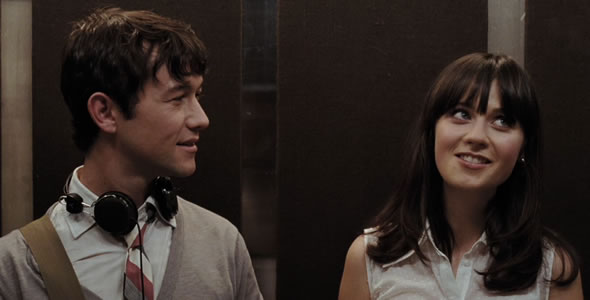

If a more chilled mood is wanted, the scene will be considerably longer with less cuts and not so frequent scene changes. This speed of editing occurs widely with romantic comedies, for example (500) Days of Summer and Crazy, Stupid Love. 


Style
The transition from one scene to the next can be conducted in different ways.

Straight Cut
Most common when trying to subtly change from one shot to the next. Straight cuts are not acknowledged  by the audience, which helps maintain a sense of reality.  


Dissolve
This is when one shot fades out while the other shot gradually fades in. The audience is able to see both shots in one frame at the mid point of the dissolve. The dissolve effect is used to show how a period of time has passed between these two scene. 


Fade
When a shot is fading it progressively lightens or darkens the image until it become completely black or white, This can signify someone passing out, dying etc. Fade ins occur during the start of the film and fades out are the opposite.


Wipes
One image is replaced by another in the frame
with a vertical/horizontal line or any other shape. The most famous use of this transition was George Lucas' Star Wars franchise.


Jump Cut
This style of editing breaks the continuity method. Jump cuts are not favored by directors this is because of the continuity error it comes across. When a jump cut is used it can be seen profoundly as it looks like a large section of the movie has been removed.


Graphic Match 
This technique is used to transition one scene to the next fluently, using two shapes or objects that look similar to each other. It's designed to be subtle, so the audience can't see the change of scene.


Shot/Reverse Shot
This editing skill is often used to portray conversations or arguments happening between characters. One character is shown looking at another character, then in the next shot the character is looking at the initial character.


Match-on-action
This is when the editor takes two separate shots of an action, that starts in one scene and finishes in the next, and places them together seamlessly.


Eye-line Match
When we see a character looking at something that is off screen. The camera then follows the characters gaze at the thing they are looking at.


Continuity
The initial establishment of this style of editing is to create a realistic coherency. That gives a logical sense of time moving forward, this is achieved with smooth cuts between shots.


The 180 Degree Rule
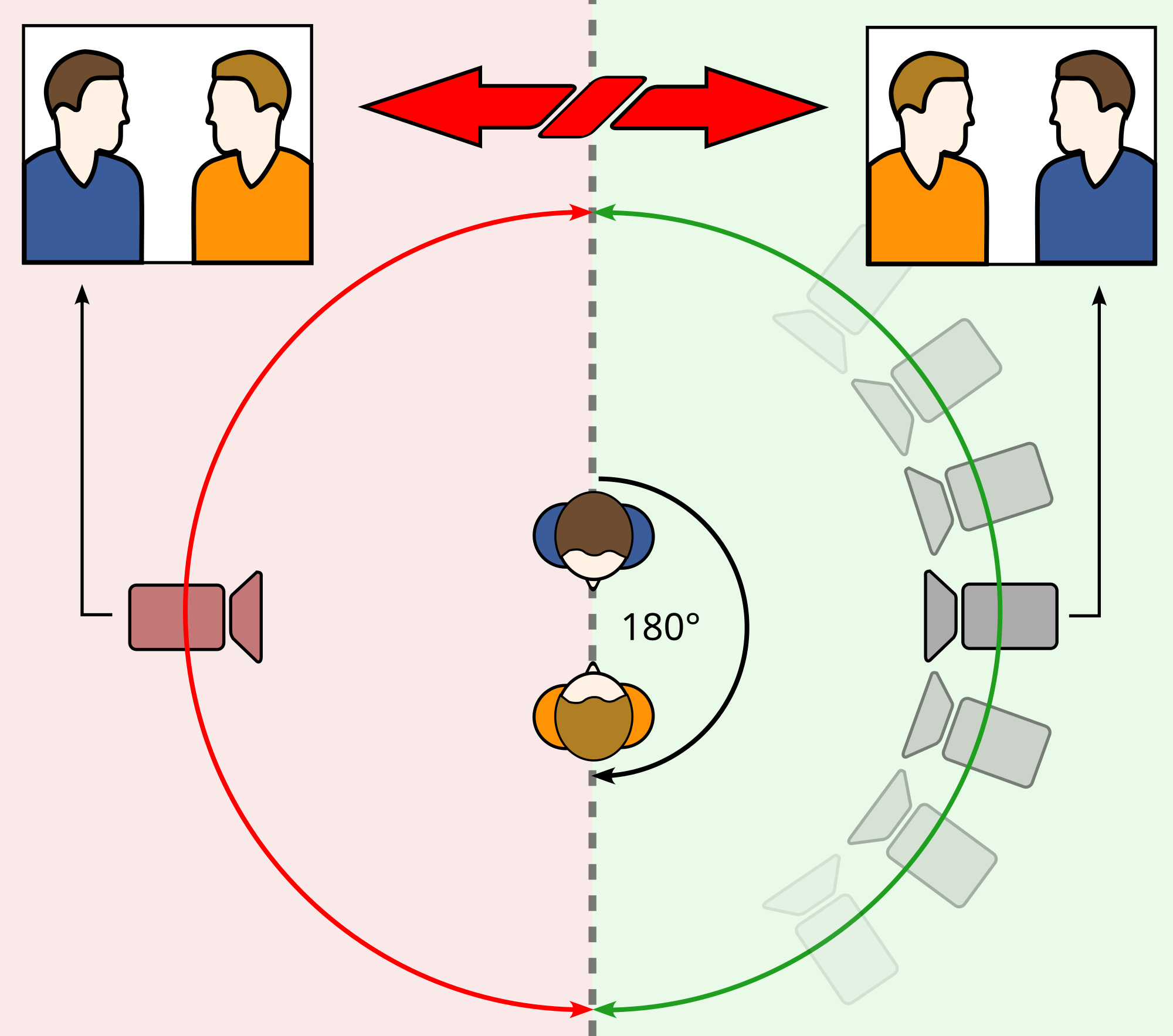
A guideline that illustrates how a scene should be taken when two characters are in the same scene. It states how the characters should always stay at the same position as they were from shot to shot, whether that be left or right from each other. If the camera should pass over the dotted line shown in the diagram this is called crossing the line.


Tuesday, 4 November 2014

Sound Exercise


We used a technique that allowed the punch to look more realistic by getting the angle shot from behind the girl. Where we edited in the punch sound effect so it is more believable.

We used the boom mic so the viewer could hear what was being said more clearly and louder. This was used to a great advantage and was used effectively especially for a exercise  that revolves around sound. During the making of the film we deeply considered our used of diegetic and non diegetic sounds. The non diegetic sound was the end credit music, that we added in. The diegetic sounds was the dialogue between the two people and myself. Also the punch sound effect was also a diegetic sound, because it was within the world of the short film. The off screen sound was the knocking on the door. Unfortunately we did not get the opportunity to utilize any contrapuntal sounds or a sound bridge. However we did get to insert a sound clip, which reflected the mood of the story, with the Eastenders theme tune. Overall I think that the positive elements of our film was the many uses of sound techniques we used. I would however improve this by adding a sound bridge or contrapuntal sounds.


Preliminary Exercise


In this task we were assigned to experiment with editing techniques: Match-on-action, Eye-line match, 180 degree and shot reverse shot and an additional graphic match, which was not compulsory. Furthermore, we successfully completed all of these styles of editing in our exercise.

Firstly, we used a graphic match with a watch and a clock, as the are both very similar in shape and uses of time. However because the sizes of the watch was far off from the size of the clock, the clock came out of line with the watch. However, the concept was achieved.


Secondly, we incorporated the eye line match into our work by having a shot of our actress looking at the report card. Then the report card all in one shot, so the audience can see what she's looking at. 


Thirdly, we used match on action twice. Once for when the actor gets out of the chair, and again for when she goes out the door. With the precise editing and camera work, I think we achieved this very 
effectively.  


In this assignment I think we made very little mistakes and we executed each editing technique very well. Some positive elements was the match on action because of how it seamlessly went together, with the editing,. However, I would improve the graphic match because it wasn't constructed as well as I wanted it to be. 


Tuesday, 14 October 2014

Media Theories

There are many ideas and suspicions circulating media. The following theories are justifiable as they all show general principles upon the media they have based their idea upon.


Enigma Code

Firstly, the Enigma Code is a text that is read and understood in different ways, there is always more than a single way to read a text. Bathes believes that you should not take a storyline or plot the way that it is. You should find a deeper meaning to understand the text in a way you understand it. The Enigma code allows the audience to be more involved and drawn in to a story. To be indulged enough to question a plot in different ways, there is always more than a single way to read a text.


The Hermeneutic Code 

This code is the story of which starts off with the audience being kept in the dark of what is going to happen. This keeps the audience in suspense and questioning.

The Proairetic Code  
This code can also relate to the previous code. This also build suspense and may leave the reader wondering what will happen next.


The Sematic Code 
This refers to the story using connotations to keep the readers guessing if there are other meanings to the original storyline.

The Symbolic Code 
This code reflects the sematic code as the symbolic code also has a wider meaning of a textual idea.

The Cultural Code
It is a recognisable theory that cannot be challenged as it is the only truth and foundation of the text.


Binary Opposites

Claude Levi-Strauss believed that the understanding of certain words is not just of the word itself, but the difference between the word and it's opposite. For example 'good' is opposite to 'bad'. In films it can refer to the opposite of a villain which is the hero, the human and the supernatural. Over recent years plots of films have become more complex. An example of a supernatural binary opposite is Harry Potter. Harry is seen to be the good guy and his enemy, Voldemort is the bad guy.  Throughout the franchise Harry is the inonnocent vs the corrupt Voldemort - another opposite portrayed by these characters. 


Laura Mulvey's The Male Gaze


This theory takes a feminist approach to cinema. The theory was that women are viewed as sexual objects of male desire. In a film the camera can act as a heteosexual male who we are put into the point of view of. The camera will highlight the women's curves of her figure. Films project a patriarchal society, where phallocentrism is regularly shown - phallus symbols give the reflection of male power and dominance.


The following are NARRATIVE theories.

Todorov's Narrative Theory

In 1939 Todorov created a theory that could relate to any film.  He believed that all movies followed the same narrative pattern in five stages, these are:

1). There is a state of equilibrium at the beginning

2). A disruption of that state by an action
3). A recognition that the disorder has occurred
4). An attempt to repair the destruction the disruption  had made
5). A return of restoration of a new equilibrium

As this theory can be used with any film, here is an example of an action thriller, The Maze Runner. (Contains Spoilers)
1). State of equilibrium - There is a community of young boys in a field ( "The Glade") where they fend for themselves. They are contempt and used to their routine.
2). A disruption - This is then interrupted by a newcomer called Thomas, who decides to do things differently by going into the forbidden maze
3).A recognition the disorder has occurred - The boys realize Thomas is different and does things in a way he think will help them get out of captivity
4). Attempt to repair the destruction the disruption made - They fight off the Grievers, Thomas let out unintentionally
5). A new equilibrium -  The boys and girl get out of the maze to be saved by a team of officials, that take them away from the dangerous place they once lived in to take them to a new place
  

Classic Hollywood Narratives 

It is structured in an unambiguous formation - the beginning, middle and end.  There is generally a distinct resolution at the end. There's a three act structure which shows an obvious format which we are familiar with. 
  1. Problem is introduces at the start
  2. Characters work on the problem
  3. The problem is solved at the end


Vladmir Propp's Character Types Theory

He suggests that all narratives have eight different character types: 

  • The Villain -  who fights the hero
President Snow - Donald Sutherland (The Hunger Games Catching Fire) 
  • The Dispatcher - shows that the villain is evil and send the hero off to the problematic matter
Yoda - Frank Oz (Star Wars)
  • The Helper - helps the hero in the quest 

Donkey - Eddie Murphy (Shrek)
  • The Princess of Prize - the hero is unable to have the woman he desires as there is evil getting in the way of them being together
Gwen Stacy - Emma Stone (The Amazing Spiderman)
  • Father - he awards the hero for his efforts
  • The Donor - prepares hero and/or gives them a useful object
Nick Fury - Samuel L Jackson (Avengers Assemble)
  • The Hero/Victim - reacts to the donor, marries the princess
Batman - Christian Bale (Batman Begins)
  • False Hero - takes credit for hero's actions, and then tries to marry the princess

Oscar - Will Smith  (Shark Tale)

Genre of Film

Genre is a type of media that fits into a category.

Genre is an important and key essential in film. Genre often makes films very easy for filmmakers to create. This is because it targets to a specific demographic for the viewers whether its horror, a romantic comedy or a documentary. Everyone has a genre they favour and love to watch.  The audience like the idea of genres because it can suit the mood they are in at any cost. If they are feeling energetic and upbeat they may want to watch an action adventure movie or thriller.There are many other types of genre for instance: comedy, musicals, crime, period dramas, westerns, sports, science fiction etc. 

For the writers and directors it is a simplistic way to get money. More currently the film industry have been targeting teenagers for horror movies (Paranormal Activity franchise, As Above So Below), even though it may be unsuitable for some to watch, they purposely rate the movie a 15 so that teenagers will pay to see their film.


Furthermore, the action genre has also become very successful. With The ever growing popularity of comic books, series of superhero movies have been made. From The most recent Guardians of the Galaxy to the Avengers Assemble franchise it is a way for filmmakers to produce content that is infinite. Also with this franchise also come merchandise which produces more money added to the box office only their movie. Comic/ action movies are very popular with not only children but teenagers and young adults; or even men and women who have grown attached to their favourite superheroes over the years. 

Therefore as you can see genre is an important factor in any movie being made today. As it stimulates and engages the audience in whatever genre they choose to be lost in. 

Tuesday, 7 October 2014

Conventions of a Thriller

Thrillers are named after the fearful excitement they give the audience. Thrillers are flexible and entertaining with non stop action. Thrillers should consist of fast pace frequent action with resourceful heroes. The plot is usually villain driven, who creates difficult obstacles the hero must avoid and overcome, to win. They use devices which add to the suspense such as red herrings Red herrings are a decoy to confuse the audience into thinking it's something it is not. As well as this they use cliff hangers, hinting the story isn't over yet or a gripping finale to finish at a aggravating yet climactic end. They also use sound very tactfully with their use of music. The example I have used is a score by acclaimed composer Hans Zimmer. This music portrays an intense feel to the thriller, Inception which adds credibility to an already impactful movie.


Thrillers are a very complex genre, as they have many sub-genres. Thrillers can overlap other popular genres. Here are some sub-genres of Thrillers:
Firstly, a psychological thriller consists of a mental and emotional like conflicts the main characters may face. An example is Donnie Darko, Blue Velvet and Se7en.
Secondly, disaster thrillers have populated over the years. Some sort of natural disaster occurs during a film like this. Such as: floods, earthquakes, tornadoes and tsunamis. Films like The Impossible and newly, Into the Storm are examples of this genre.
Thirdly, drama thrillers are another common type of sub-genre. These films involve more character development than an action thriller would, which builds more substance to the film. They sometimes come with great plot twist like The Prestige, The Illusionists and The Interpreter are some examples.
Moreover, a crime thriller in this case focus more on the criminal(s) rather than the legal force of policemen. Full of suspense on if the criminal act that has taken place was successful or not. Some examples include: Reservoir Dogs, The Usual Suspects and Inside Man.
Furthermore, action thrillers often consists of a hero/heroine who has to accomplish their goal in a constricted amount of time. These films contain lots of violence and the antagonist; that we are supposed to root for, is very clear from the start. Examples are The Hunger Games, James Bond and Jason Bourne franchise.
And finally, political thrillers which the hero/heroine had to ensure the stability of the government. Seven Days in May, Argo and Zero Dark Thirty are all examples of that type of film.


Cinematography Exercise - Evaluation


In this short film exercise we were not aiming to create a story but towards the end we decide to make a miscellaneous plot. The story that we cam up with is that Me and my partner for this task are looking for her phone. Searching the whole school for the phone. We also achieved including all shots in out short clip. We decided to do an high angle shot for one of our sequences, because it showed how I was lost and confuse because i couldn't find this phone and how i had almost given up. The choices we made were successful as our original motive was to get the camera shots needed that would fit together to make somewhat of a story.  All of our shots were taken with as much care and as steady ad we could. Howeve, the shots that were not start was the ones without a tripod for instance the tracking shot which tilted more than we wanted it to. Also, the rolling shot was not at all smooth this was mainly because of the stiffness of the tripod which didn't allow us to do a satisfying shot we were happy with. After many attempts by both me and my partner the best outcome was what we have in the final product. All shots I felt were framed up to the needed standard. The shit which overall was not up to standard of our other shots was the again tracking shot, medium shot and rolling shot. The positive elements of out film was the outcome of the over the shoulder shot and the extreme close up. Both felt quite well constructed, and the over the shoulder shot was well rated for there not being anyone behind the camera at that point. There needs to be some improvements in our film as we have not finished the final outcome was not what we wanted. I added a shot in last minute as we forgot which thew our whole project off. Including the music and captions. Therefore that is something that we have to go back and do again.